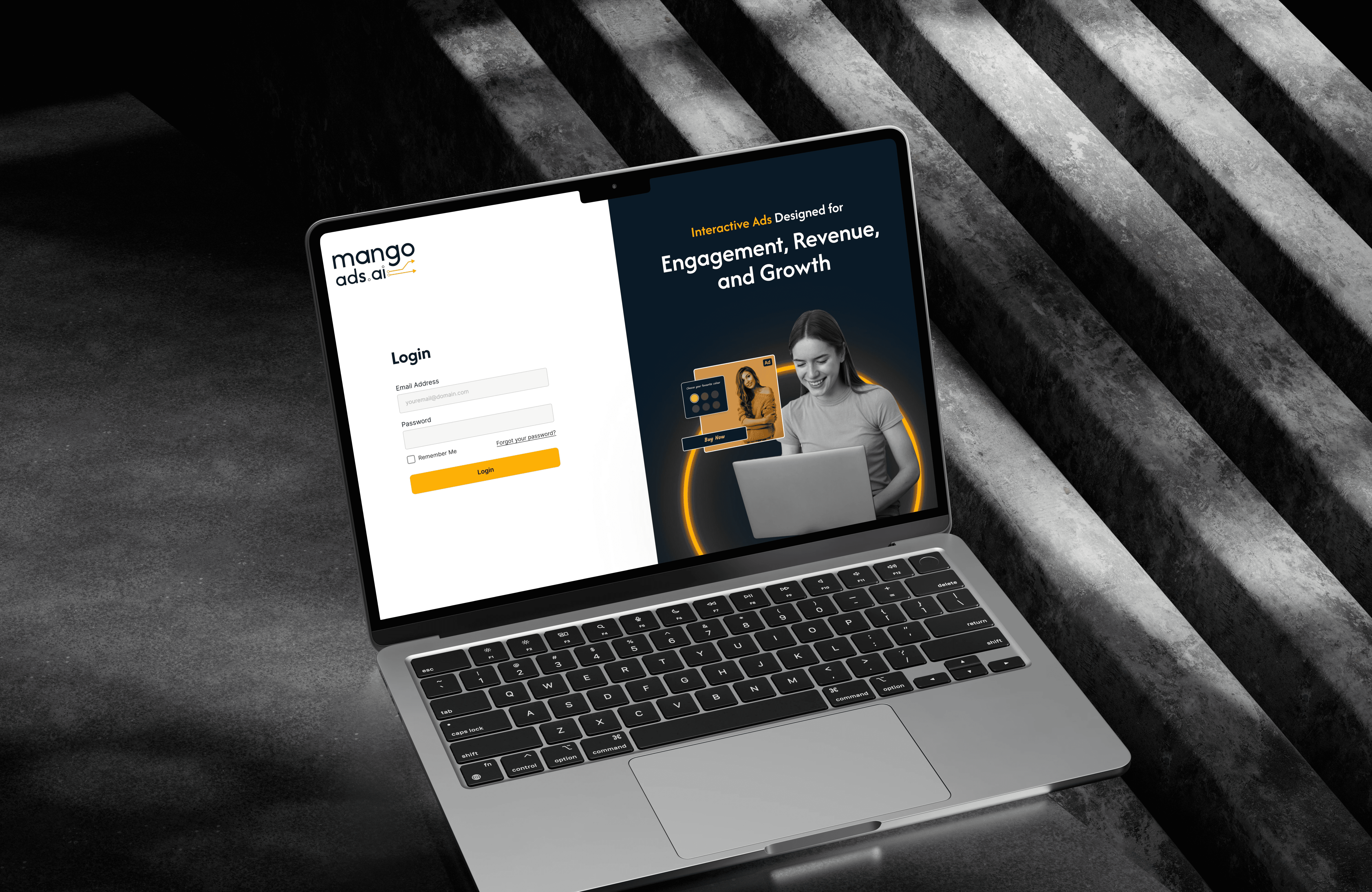
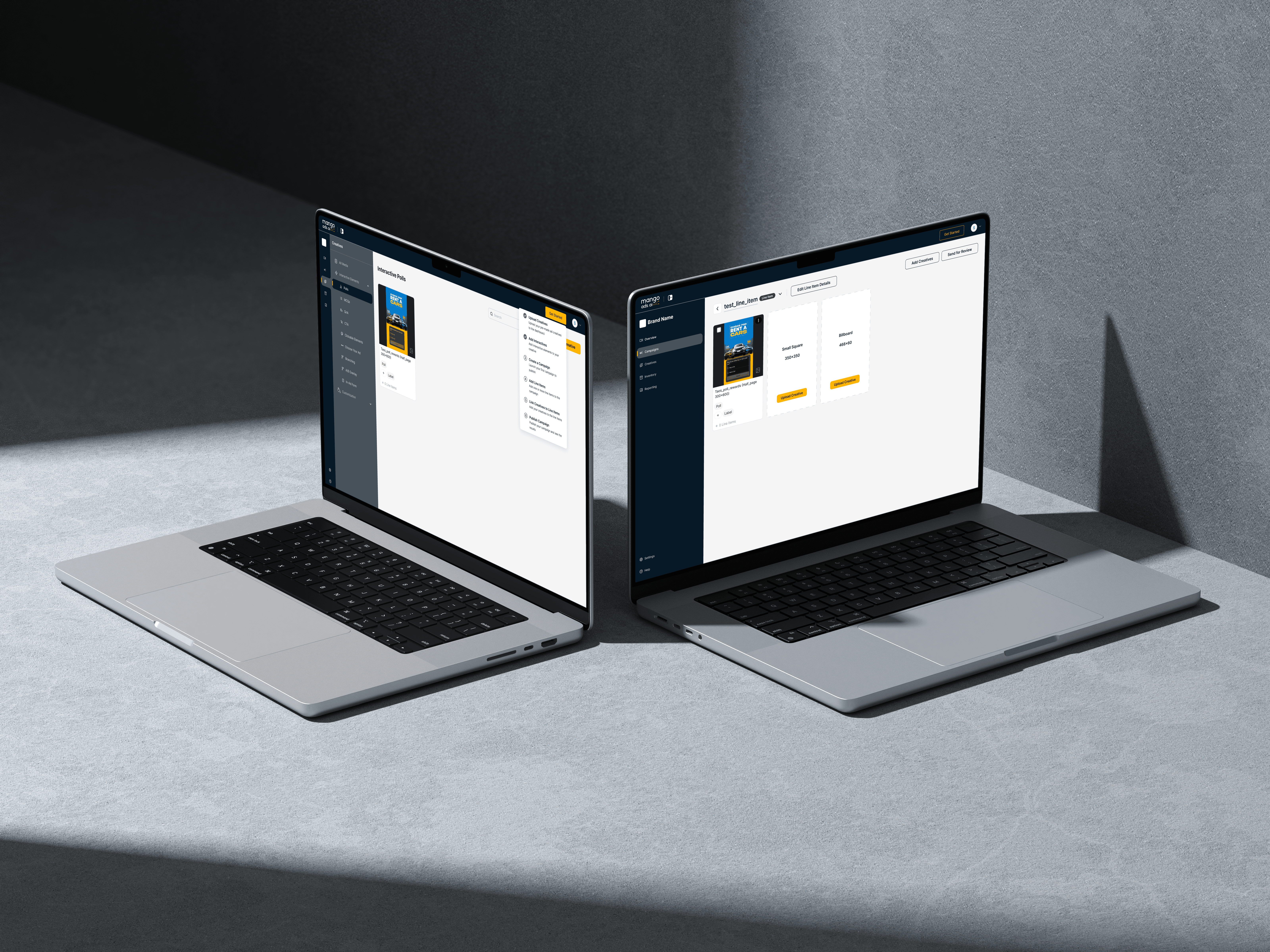
MangoAds.ai Dashboard
Building an MVP Dashboard for Interactive Ads
COMPANY
MangoAds.ai
Role
Product Designer
Timeline
15 Weeks
YEAR
2025
Note to Viewers
This case study highlights my role in designing an MVP that is still in its infancy. To avoid premature exposure, only select details have been shared. The focus is on the design process and the specific contributions I made, rather than the full product scope or strategy.
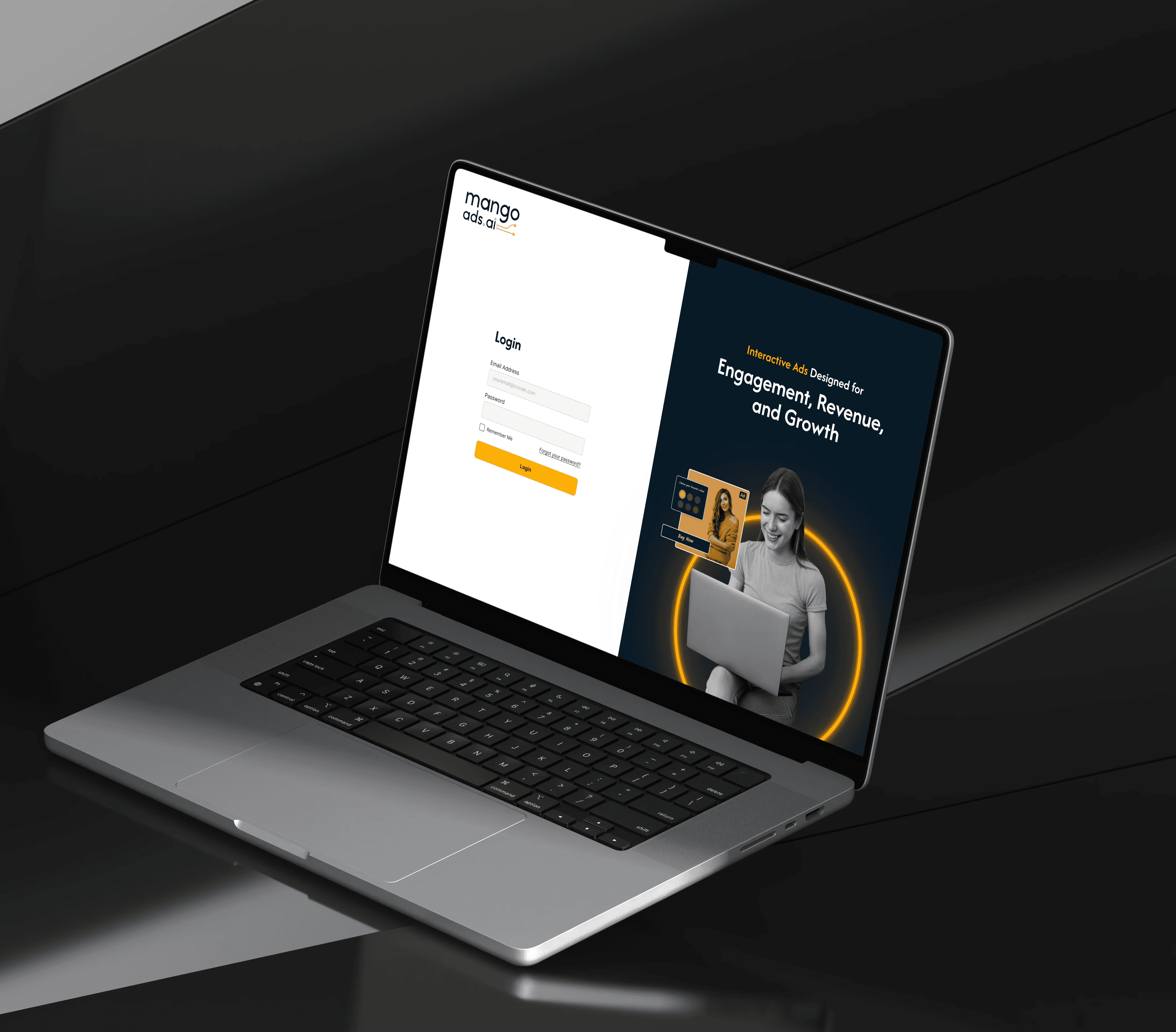
A Quick Summary
MangoAds.ai is an interactive advertising platform developed as a spin-off from live2.ai to address a common frustration among marketplace publishers: the lack of control over ad content when using Google Ad Manager, which often served random, non-contextual ads. The platform enables advertisers to create and manage rich, interactive ad formats through a simple, self-serve dashboard, while giving publishers full control to display only contextual ads that match their audience and aesthetic.
Role: Lead UI/UX Designer
Team: Cross-functional team including Founder, CTO, Developers (Frontend & Backend), and a Sales Representative.
Timeline: 15 Weeks (from concept to live MVP pitch)
Result: Successful pitch led to a confirmed deal and interest from additional marketplace platforms
Design Impact:
Reduced ad publishing time to approximately 13 minutes
Eliminated the need for developer or creative team support post-setup..
Validated by stakeholders and prospective users through live demos and testing.
The Problem
When we visit an online marketplace, we’re often greeted by a barrage of ads, sometimes more than we bargained for.
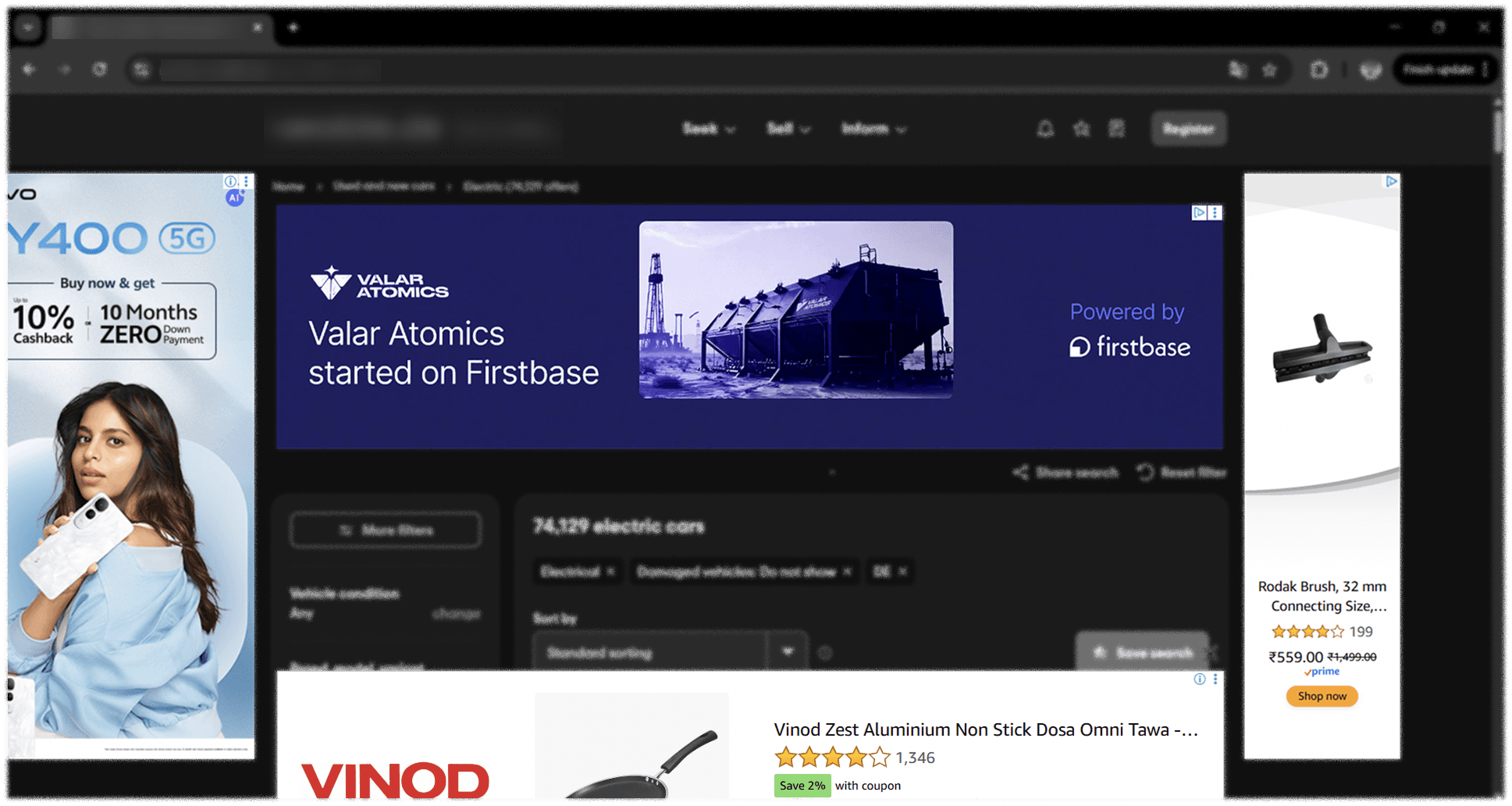
But how do the people directly affected really feel about this? To gain a deeper understanding of the problem, we engaged with key stakeholders to hear their perspectives.
Publishers say -
“Most ads on our site feel irrelevant or out of context, which puts off visitors. Even when we want to work directly with partner brands to place ads in specific spaces, the process is slow and complicated with too many people are involved, making coordination difficult.”
Advertisers say -
“Even though our ads reach the right audience, engagement remains low, which impacts our ROI. We want to connect with consumers in a way that feels relevant and enjoyable, not intrusive. Our goal is to make ads that invite interaction and leave a positive impression.”
THE CHALLENGE
“Publishers are frustrated by the lack of control over irrelevant ads that disrupt user experience, while advertisers struggle with low engagement and limited returns, highlighting the need for a simple, contextual, and interactive ad solution that benefits both sides.”
Research Approach
Although formal primary research was limited, we conducted secondary research to better understand the ad technology ecosystem, including demand-side platforms (DSPs), supply-side platforms (SSPs), and Ad creation platforms.
In addition, we held stakeholder interviews with two marketplace platforms to gain direct insights into their pain points and challenges with existing ad solutions. While the research scope was intentionally lean, it provided enough direction to validate the opportunity and shape an MVP focused on simplicity, speed, and contextual relevance.

Stakeholder Interview Insights |
|---|
|
|
|
|
|
Competitior Analysis Insights |
|---|
|
|
|
Our Solution
We designed a solution for advertisers and marketplace publishers seeking a simple, controlled way to create, publish and track contextual ads. The following section highlights the user flows and key screens that shaped this experience.
User Flow Diagram
To demonstrate the core experience, we mapped out a basic flow covering ad creation, campaign setup, and publishing. This simplified version captures the essential steps for our primary users.
Key Screens
Building on the basic user flow, a high-fidelity dashboard was designed to bring the process to life. The following section highlights a few key screens from the MVP, showing how the simplified flow translated into an intuitive ad creation and publishing experience.
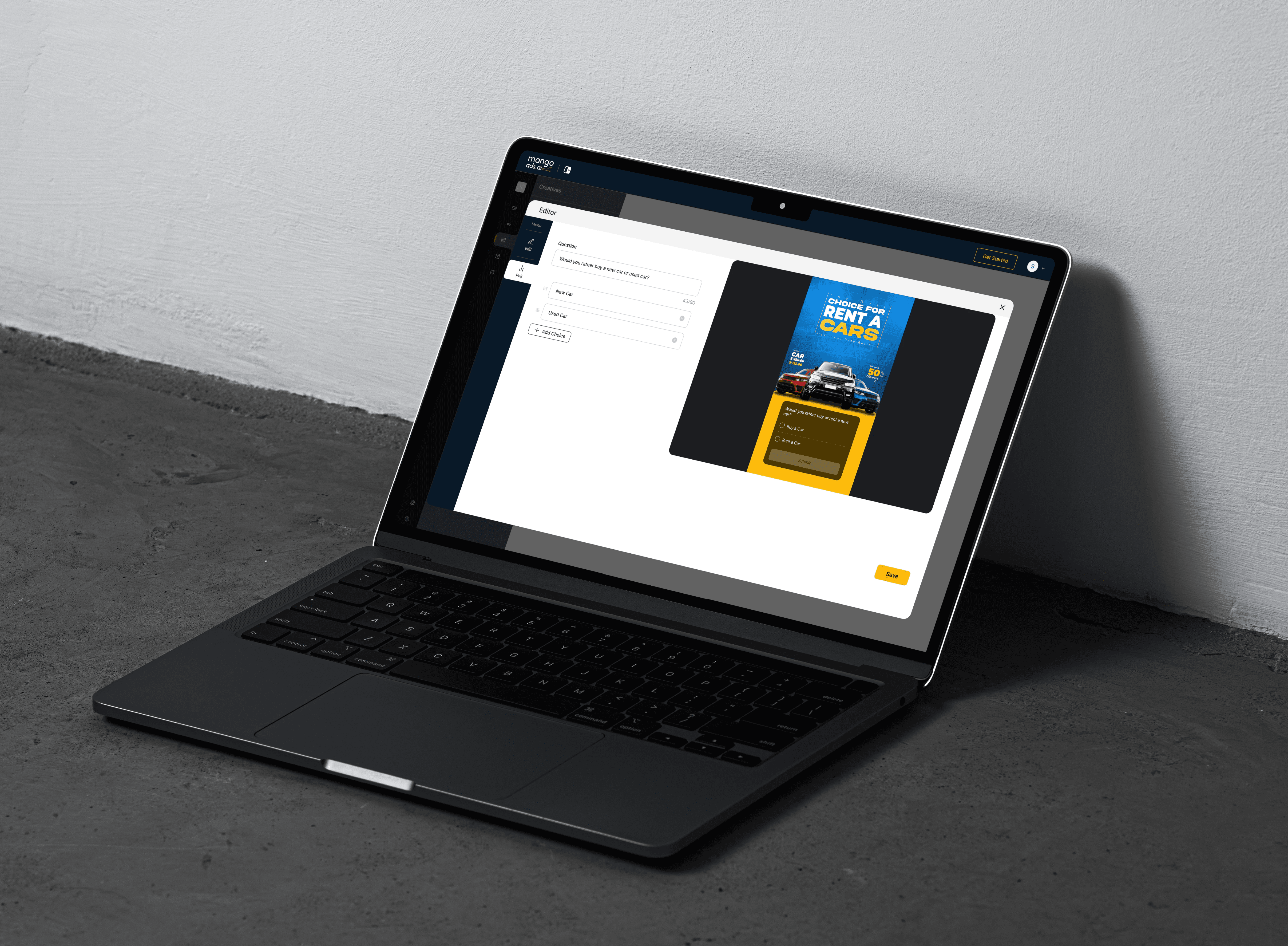
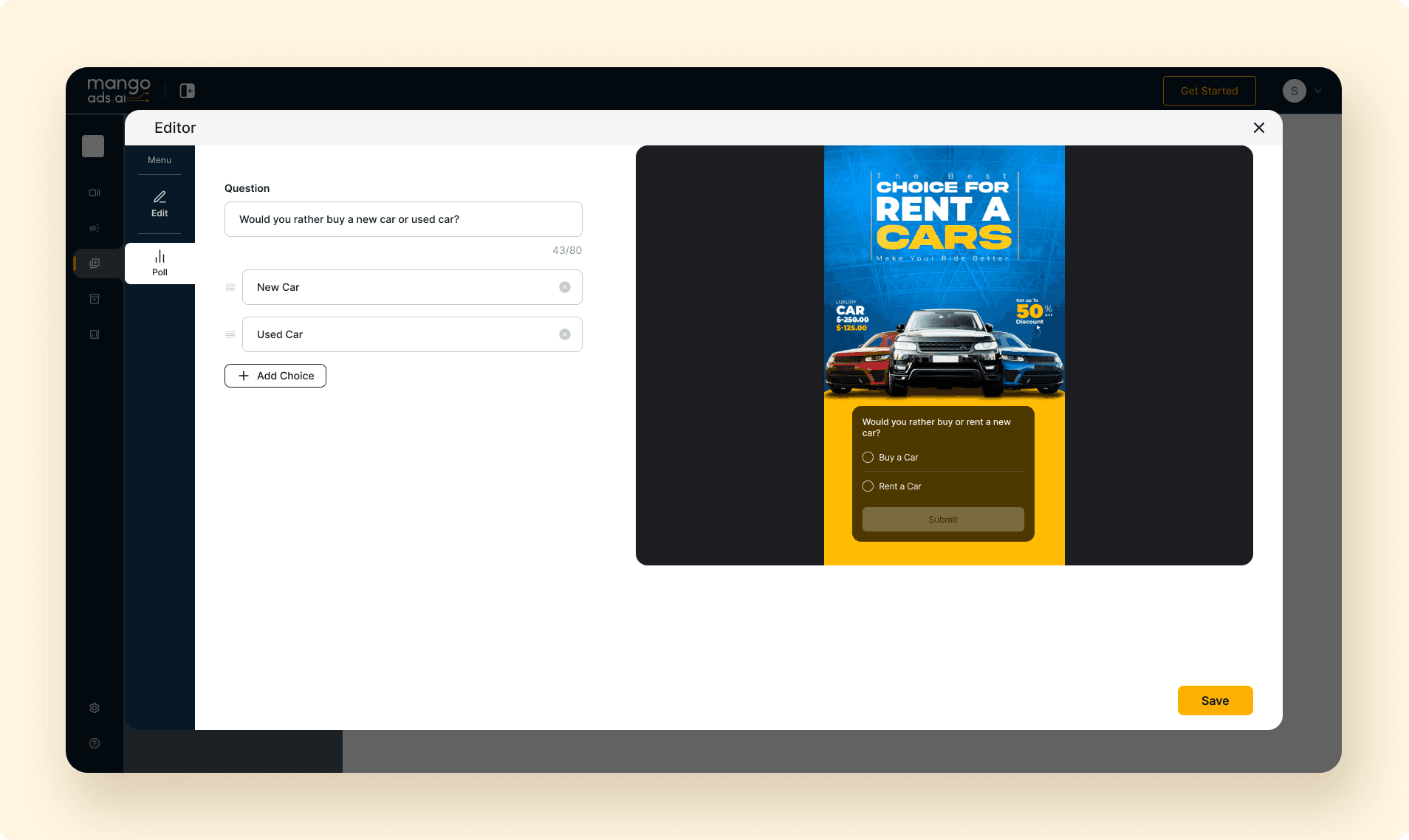
Interactive Ad Builder with Live Preview
Advertisers often felt overwhelmed by the technical steps needed to set up interactive ads. The builder simplified this by turning a static image into an interactive ad in just a few clicks, while a live preview showed exactly how it would look. By handling tracking and events automatically, it removed the technical barriers that usually slowed down interactive ad creation.
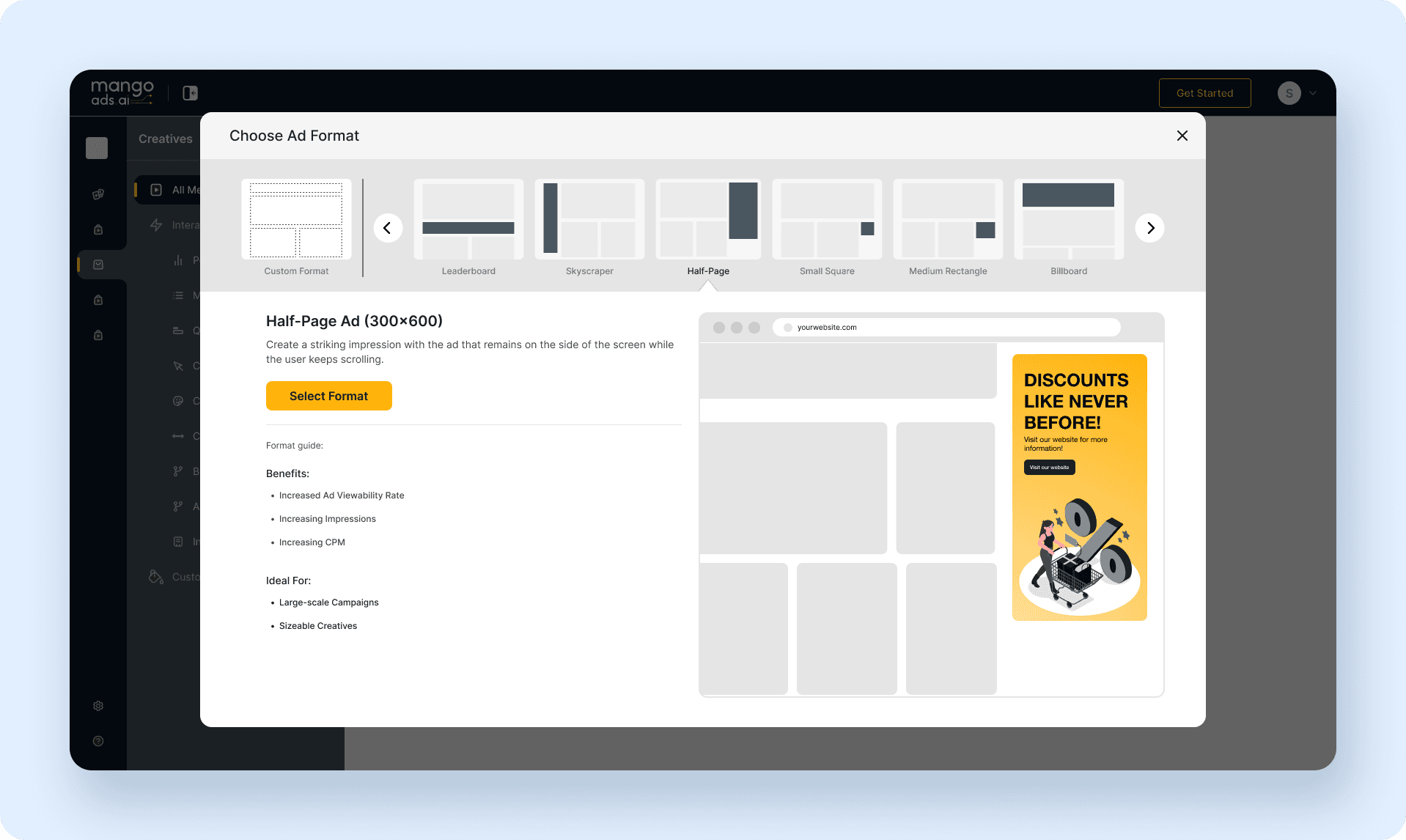
Multi-Format Ad Support
Publishers were frustrated with ads that didn’t fit properly into their site layouts. The dashboard solved this by supporting both IAB-standard and custom ad formats, with templates that adapted to different slot sizes automatically.
Audience Targeting and Presets
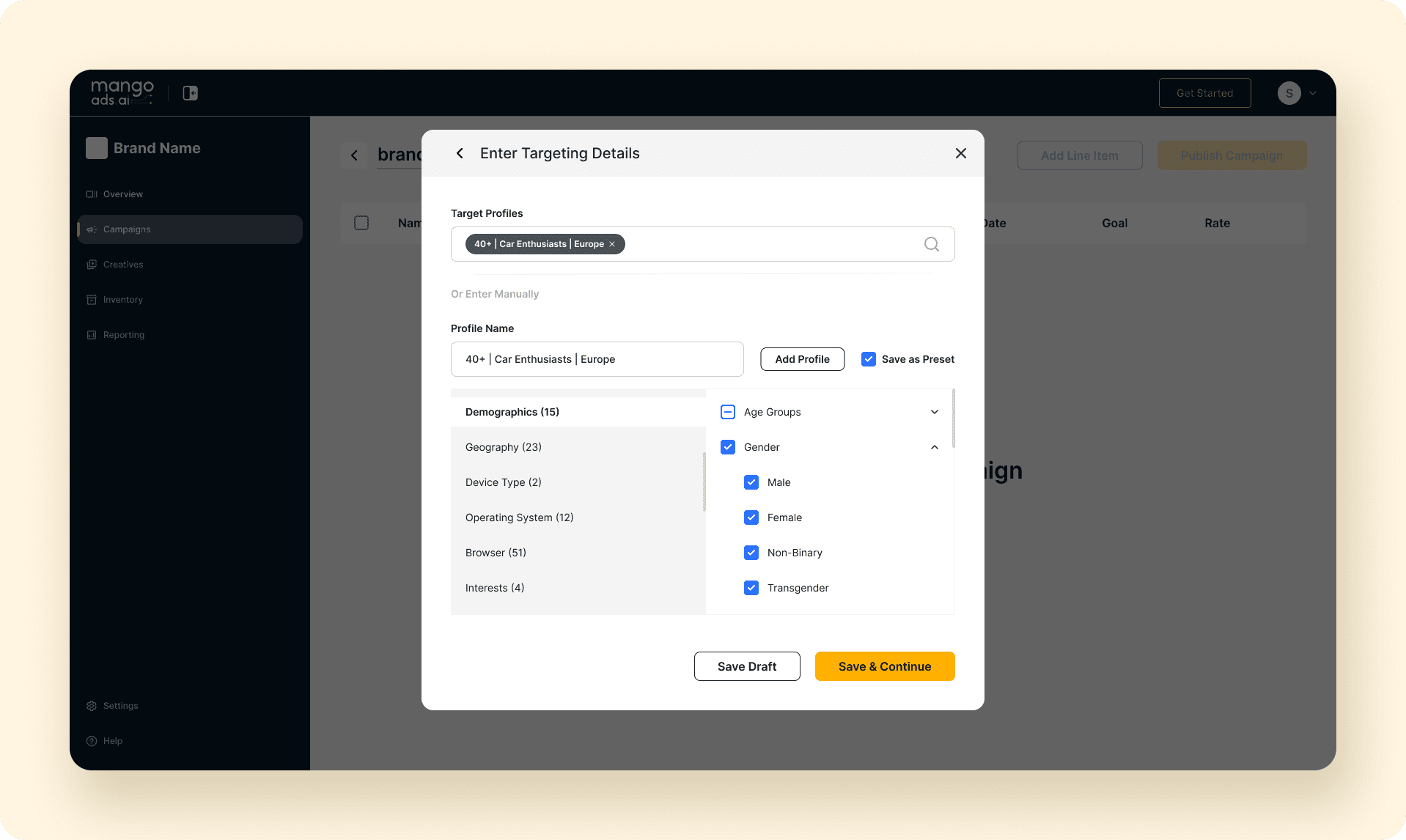
A common issue was wasted impressions from irrelevant ads. With predefined audience categories and subcategories, advertisers could easily set up campaigns that matched the marketplace’s context. The option to save targeting as presets made repeated campaigns faster, reducing time-to-launch while improving relevance.
Integrated Ad Approval Workflow
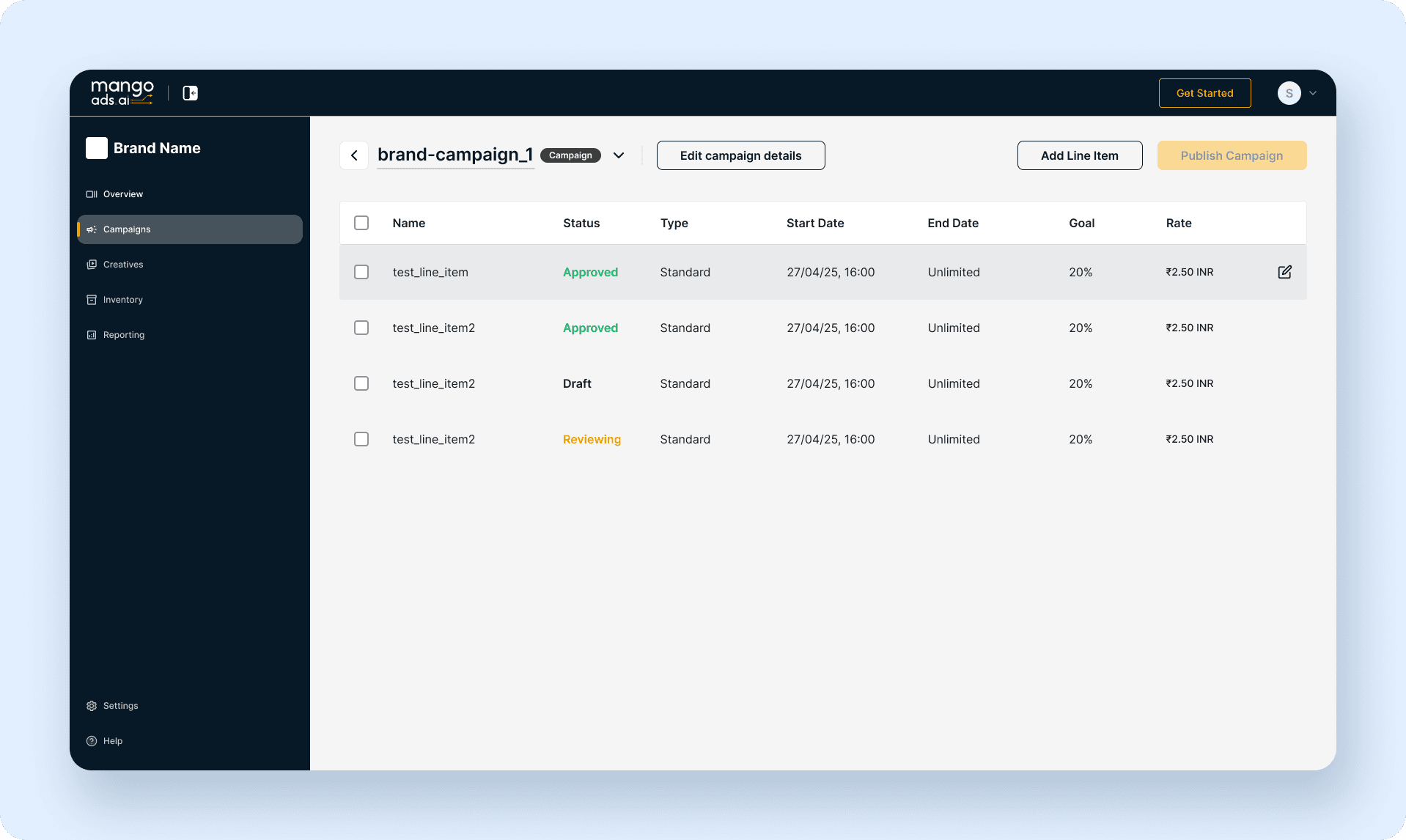
Approval cycles used to be messy, often involving emails and multiple stakeholders. The built-in workflow streamlined this by sending ads directly to the publisher for review. Advertisers could make edits instantly, and move to publishing without delays, improving effective communications between the publisher and advertiser.
Granular Campaign Reporting
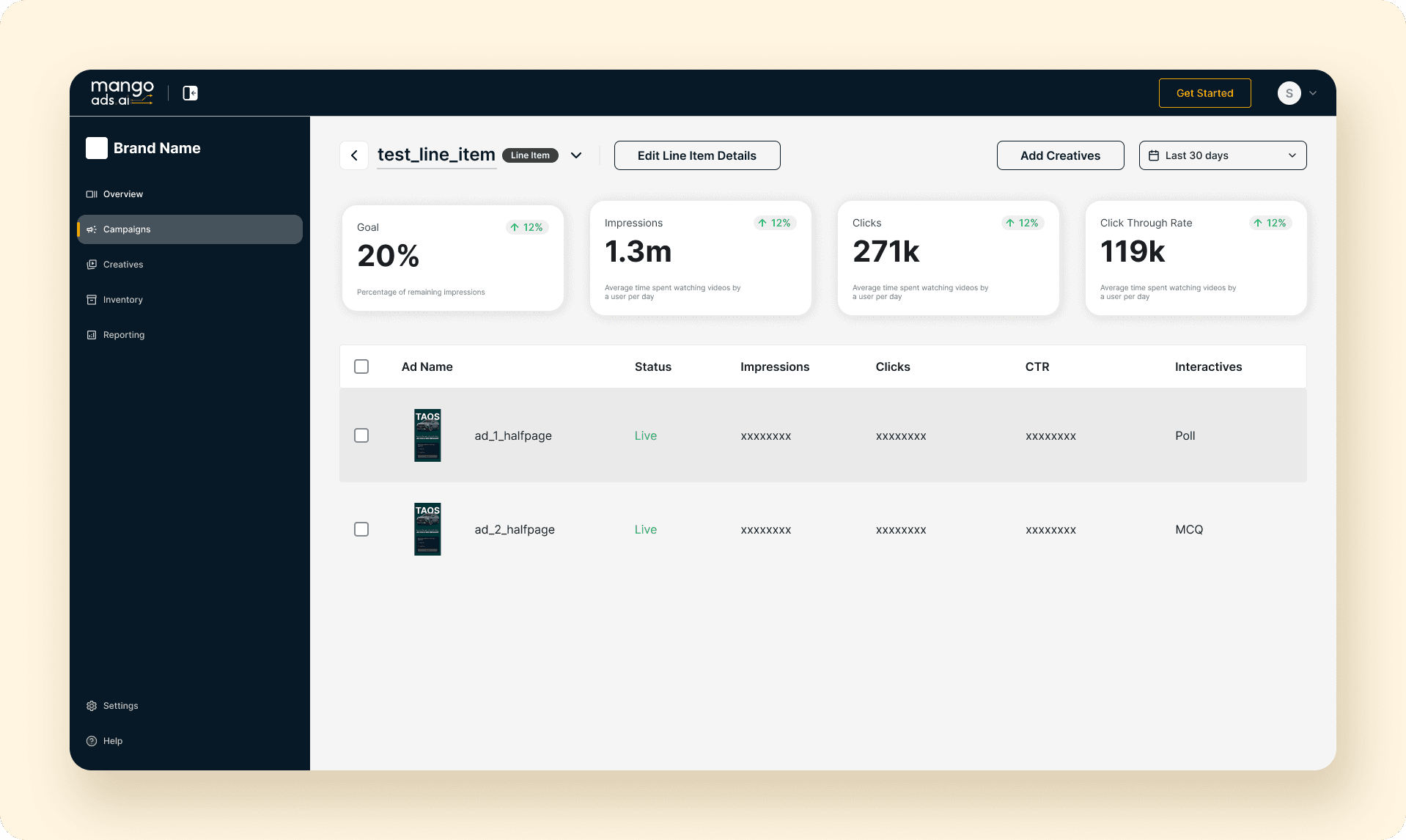
Advertisers wanted insight into whether interactive formats actually worked. Reporting was broken down at campaign, line item, and individual ad levels, helping advertisers spot which formats drove engagement and publishers prove the value of contextual ads to their partners.
Results & Impact
The dashboard is currently in beta, and early feedback has been encouraging. While we didn’t have deep analytics (since it was early-stage), we received strong feedback from internal teams and potential customers. While we’re still rolling out to our full customer base, here’s what we’re seeing:
Users was able to create and publish a live interactive ad in under 15 minutes (assuming the publisher reviewed and approved within seconds, which we did).
Stakeholders appreciated the clarity, simplicity and speed of the campaign creation process during live demo pitches.
Product’s business model was validated and opened discussions with additional marketplaces.
My Reflections
This project pushed me to grow beyond design execution. I learned how to prioritize user needs while working with strict time and resource constraints, take ownership of product direction as the sole UX designer, and present design decisions to cross-functional stakeholders and enterprise clients.
Despite my limited experience, my team trusted me with this project and it was a valuable experience that taught me how UX can drive business outcomes when it’s aligned with user problems and delivered with clarity.
To explore the product further, visit — https://mangoads.ai/ — (which I also designed)